

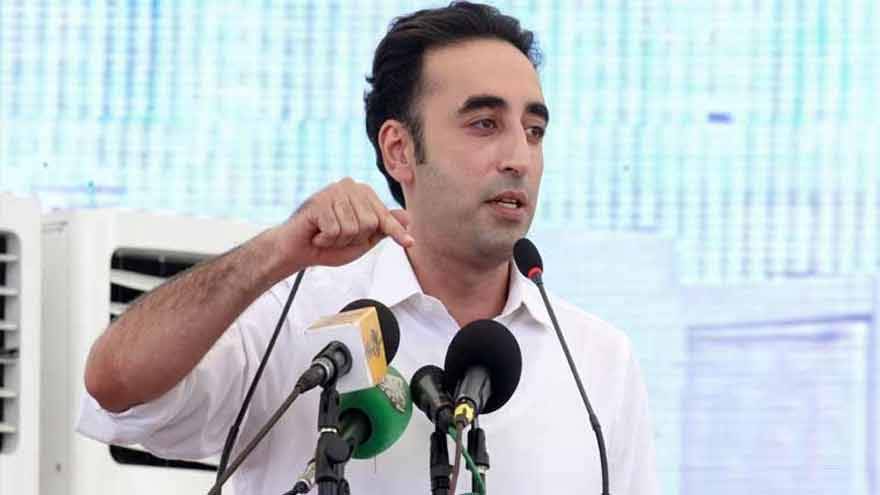
Chairman Bilawal Bhutto-Zardari of the Pakistan People’s Party on Friday officially opened the 39-kilometre, signal-free Shahrah-e-Bhutto — a gleaming artery from Qayyumabad to the M-9 Motorway — and ceremonially laid the foundation stone for the new Qayyumabad Corridor from Karachi Port.
The launch of Phase III of Shahrah-e-Bhutto was celebrated in Karachi today; the road has been thrown open to the public up to the M-9 Kathore Bridge, promising faster commutes and a significant easing of traffic bottlenecks.
Bilawal was joined by Sindh Chief Minister Murad Ali Shah and a large assembly of provincial and party leaders, including Sindh Assembly Speaker Awais Qadir Shah, veteran PPP figures Nisar Khuhro and Qaim Ali Shah, Senior Minister Sharjeel Inam Memon, members of the Sindh cabinet, MNAs, MPAs and senior government secretaries.
At the event, he also laid the foundation stone for Shahrah-e-Bhutto Phase II, which is planned to link Karachi Port directly via the corridor, further integrating the city’s transport network.
Speaking to the crowd, Bilawal highlighted that since 2008 the PPP has overseen more development projects in Karachi than any rival party. He said inaugurations in Karachi hold a ‘special happiness’ for him because the city is his birthplace and childhood home.
He reminded attendees that Pakistan Steel Mills was founded under former Prime Minister Zulfikar Ali Bhutto and pointed to landmark projects like Shahrah-e-Faisal and the Lyari Expressway as enduring PPP legacies. He underlined that Karachi now provides free, quality healthcare as a result of PPP policies, attracting citizens nationwide who wish to make the metropolis their home. ‘I wholeheartedly invite them,’ he declared, calling Karachi the economic and healthcare capital of Pakistan.
Answering critics of the 18th Amendment, Bilawal invited rivals to walk through the doors of the National Institute of Cardiovascular Diseases and see the transformation themselves — from crowded, under-resourced wards of the past to refurbished, well-equipped facilities offering modern care.
He described how the PPP government had extended a network of free, quality healthcare across Sindh: upgraded hospitals, community clinics and life-saving treatments delivered without charge and aligned with international standards.
The PPP chairman reaffirmed his resolve to carry forward the unfinished struggle of former prime minister Benazir Bhutto. ‘As Benazir Bhutto’s son, I have completed this project,’ he declared, underscoring the party’s track record in completing large-scale infrastructure projects.
Bilawal pointed out that Shahrah-e-Bhutto was built through a public-private partnership, completed in the same manner as the Thar coal initiative, demonstrating a continued emphasis on pragmatic, results-driven development.