

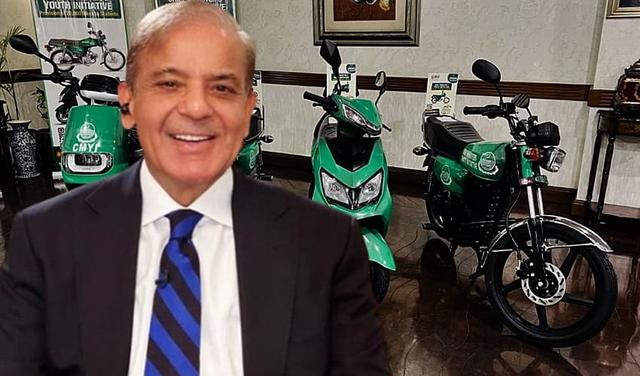
Commercial banks have shown limited interest in the prime minister’s plan to distribute subsidised electric bikes, approving just 4,075 applications (about 9% of those received). That low uptake prompted the government to announce major policy changes on Tuesday.
Because of the weak approval rate, the government is likely to miss its annual goal of distributing 116,000 electric bikes this fiscal year, even though it levies a Rs2.5 climate support charge on every litre of petrol and diesel used nationwide.
The Economic Coordination Committee (ECC) approved revisions to the Pakistan Accelerated Vehicle Electrification (PAVE) programme after the disappointing results. Launched with fanfare, PAVE aimed to encourage uptake of electric bikes, rickshaws and loaders via a targeted cost-sharing subsidy to help bridge the cost gap with conventional vehicles.
Responsibility for promoting electric vehicles has effectively been placed on petrol and diesel consumers, who pay the Rs2.5-per-litre levy; this levy will double from July as part of an IMF agreement. The scheme is financed by the levy under the New Energy Vehicles Adoption Levy Act, 2025. The Finance Division has allocated Rs9 billion for the current financial year, and the government set a distribution target of 119,170 electric bikes and rickshaws for this fiscal year.
Details show that despite a low target of 41,000 for the first phase, only 5,409 electric bikes have been distributed so far. Of these, banks approved 4,075 applications involving only Rs143 million in financing, the ECC was informed. Overall, 5,409 electric bikes and rickshaws have been approved, which is merely 4.5% of this fiscal year’s target, which ends on June 30.
Applicants had been given two options: receive a subsidised bike through a bank on instalments, with the equity payment and entire interest covered by the federal government, or receive a direct subsidy into their account after providing proof of purchase and registrationon the PAVE digital portal, followed by third?party validationof the transaction.