

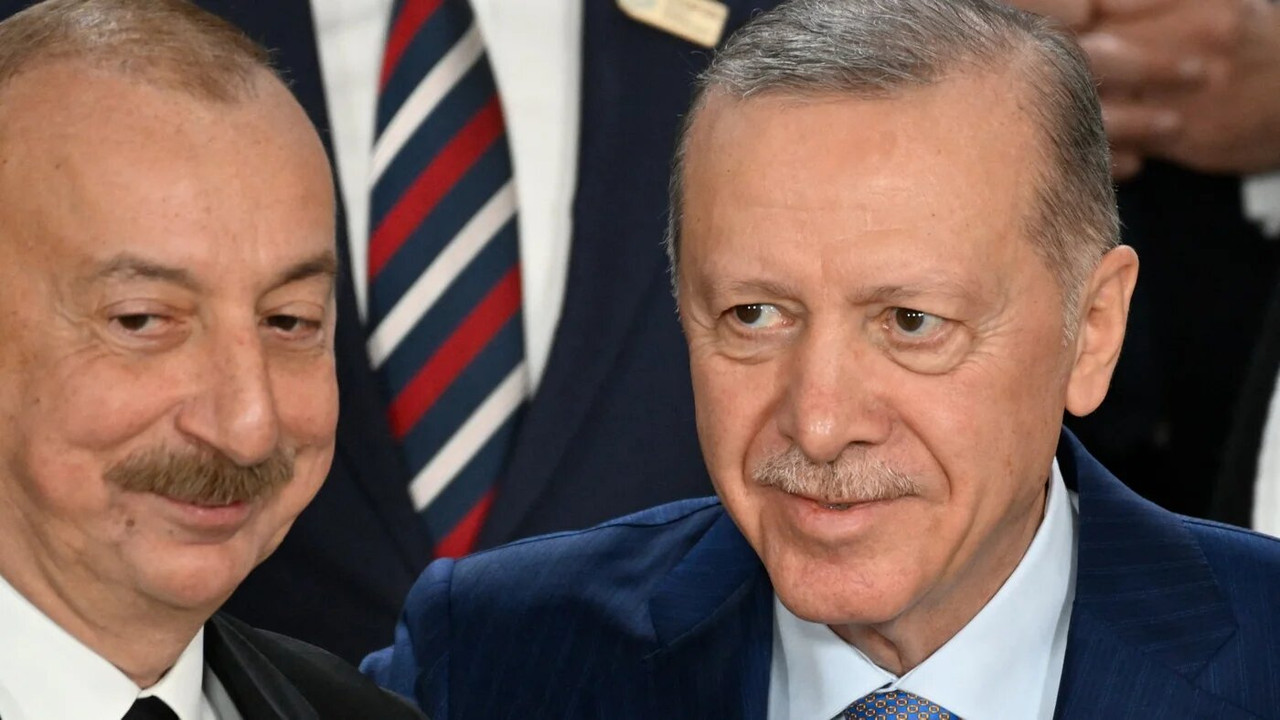
The normally close ties between Turkiye and Azerbaijan have come under strain, driven by a dispute over Baku’s restrictions on the Islamic headscarf in schools and differences over Israel.
Public tensions have become clear in what has always been a very close relationship between two nations sharing a common language, with their bond symbolized by the phrase: One nation, two states.
While top leaders have kept their rhetoric restrained, senior officials have been more outspoken in their responses.
On Monday, Oktay Saral, chief adviser to President Recep Tayyip Erdogan, dropped his usual diplomatic caution to call Azerbaijan’s change to school uniform rules—banning anything that clashes with the standard uniform or secular education principles—’unacceptable.’
‘Wearing a headscarf … is a requirement of faith!’ he posted on X.
‘We expect Azerbaijan to correct this mistake as soon as possible.’
The next day, the ruling Yeni Azerbaijan Party (YAP) responded with a strongly worded statement, criticizing Saral and MPs from Erdogan’s AKP for their ‘populist and irresponsible statements.’
‘The recent disinformation campaign targeting Azerbaijan has become increasingly aggressive, systematic, and openly defamatory,’ the statement said.
The clash highlighted sharp differences between Azerbaijan—one of the most secular states in the Muslim world—and the Islamo-conservative leadership in Ankara.
It also underscored tensions over Azerbaijan’s growing closeness with Israel since Baku’s 2020 Karabakh war with arch-enemy Armenia, during which Israelis supplied drones and other weapons.
In contrast, Turkiye’s relations with Israel could hardly be worse, as Erdogan accuses Israel of genocide in Gaza, and Ankara frequently releases images of high-level meetings with Hamas leaders—the Palestinian Islamist movement whose October 2023 attacks on Israel triggered the Gaza war.
Turkiye’s pro-government media has held little back, with the Yeni Safak daily denouncing the headscarf regulations as a gesture towards Israel.
“We firmly reject attempts to deliberately distort Azerbaijani-Israeli relations, portray these ties as supposedly exceptional, and use this as a basis for making political accusations against Azerbaijan,” the country’s ruling party said.
The sharp response underscores Azerbaijan’s emergence as a regional middle power.
It is more willing to push back against Turkiye as Ankara seeks to project influence from the Black Sea, increasingly ensnared by the Russia-Ukraine war, and an ever-more volatile Middle East.
“The changing geopolitical order in the greater Eurasia has enabled Azerbaijan to pursue a more pragmatic foreign policy,” said Fuad Shahbazov, an independent political analyst, indicating that meant Baku now “categorically resists the attempts of external actors, even its ally Turkiye”.
But on Friday, Kursad Zorlu, deputy head of Erdogan’s AKP, said the two sides knew how to tackle problems “within the family” in what appeared to be a tacit call for online restraint.
At a regional summit in Baku on Thursday, Turkish Foreign Minister Hakan Fidan hailed “the unshakable bond … between our leaders” despite being tested “in very difficult times”.