
On Sunday, Pakistan said it was prepared to host and mediate “meaningful talks” between the United States and Iran in a bid to halt their war, and it pointed to mounting support for its peace effort from international actors such as the United Nations and China.
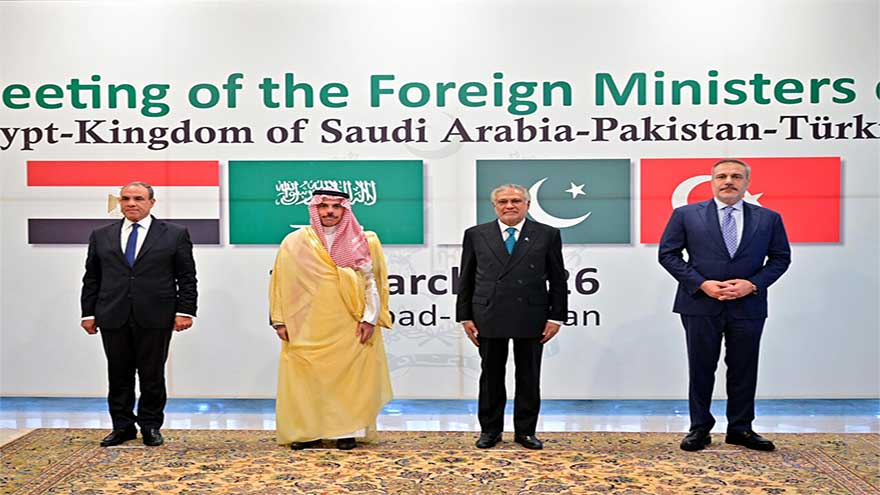
The government in Islamabad has quietly taken on the role of a key intermediary, passing messages between the opposing sides to try to contain the crisis. Foreign Minister Ishaq Dar convened his counterparts from Saudi Arabia, Egypt and Turkey for an extended meeting in the Pakistani capital as worries grew about the conflict’s wider impacts — notably the disruption of shipping through the strategically vital Strait of Hormuz.
Speaking on television, Dar, who is also deputy prime minister, said the visiting ministers had “expressed their full support” for possible US–Iran talks in Islamabad. “The foreign ministers advocated dialogue and diplomacy as the only viable pathway to prevent conflicts and to promote regional peace and harmony,” he said.
Pakistan hopes to capitalise on its deep-rooted ties with Tehran and its trusted contacts in the Gulf, as well as the personal connections that Prime Minister Shehbaz Sharif and Field Marshal Asim Munir, the army chief, have established with US President Donald Trump. Dar and Sharif have been in frequent contact with senior Iranian officials, including President Masoud Pezeshkian and Foreign Minister Abbas Araghchi, and the foreign minister said Islamabad was “actively engaged” with the US administration.
“In this context, Pakistan is very happy that both Iran and the US have expressed their confidence in Pakistan to facilitate the talks,” he added. “Pakistan will be honoured to host and facilitate meaningful talks between the two sides in the coming days, for a comprehensive and lasting settlement of the ongoing conflict.”