

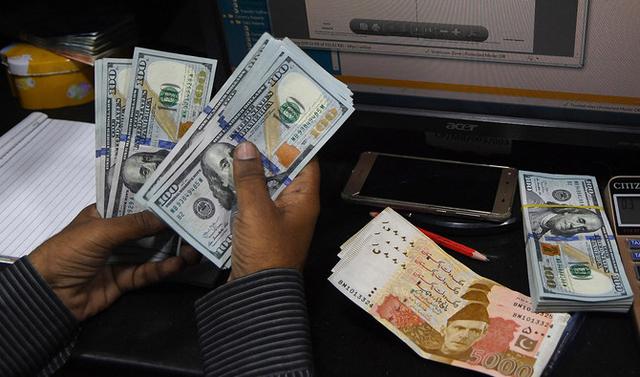
Pakistan received a steady stream of funds from expatriate workers, with remittances totaling $3.54 billion in April 2026, according to data released Monday by the State Bank of Pakistan (SBP).
The monthly flow softened, dropping 7.6% compared with March, yet it showed a strong annual rebound of 11.4% versus April 2025.
Across the July–April span of fiscal 2026, cumulative remittances grew 8.5% to $33.86 billion, compared with $31.21 billion a year earlier, highlighting the continued importance of overseas workers’ contributions to the economy.
Remittances play a pivotal role in shoring up the country’s external accounts, fuelling economic activity across Pakistan and bolstering the disposable incomes of households that depend on workers’ transfers.
At the same time, the government continues to encourage remittance inflows through fiscal incentives and by steering funds into formal banking channels, aiming to sustain steady growth and reinforce macroeconomic stability.
“The external account outlook remains fickle as FY26 approaches closure,” Waqas Ghani, Head of Research at JS Global, told Business Recorder.
He warned that with crude oil prices elevated and import momentum likely to continue, the current account is under significant strain — a pressure that domestic production alone cannot offset.
“In this context, remittances have moved from being a supporting buffer to an essential stabiliser. If inflows weaken, especially from the Gulf Cooperation Council countries where concentration risk is high, the external account could slip back into deficit,” he said.
FX reserve targets have already been revised down by $1 billion, increasing reliance on external financing. “The margin for error is thin,” he added.