
Pakistan’s Foreign Office has stated that tensions between Iran and the United States do not benefit anyone, urging both sides to show restraint.
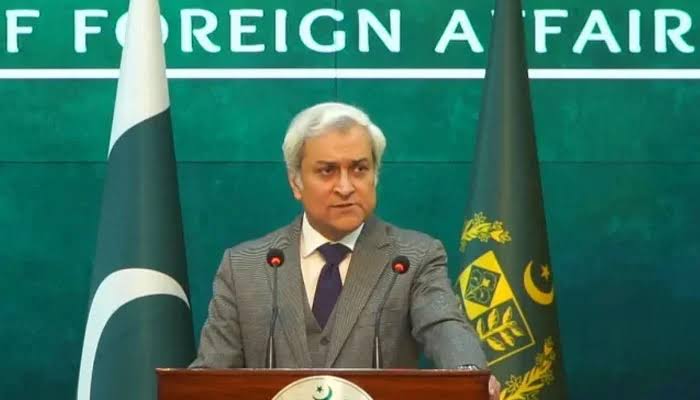
During a weekly briefing, Foreign Office spokesperson Tahir Hussain Andrabi expressed Pakistan’s concern over the renewed tensions and noted they are closely monitoring the situation in the region.
He mentioned that Pakistan believes in the ongoing implementation of the memorandum of understanding and supports dialogue to resolve issues. Additionally, he stated that Pakistan backs uninterrupted trade and oil transport through the Strait of Hormuz.
The spokesperson reiterated Pakistan’s call for the continuous safety, security, and freedom of navigation in the Strait of Hormuz, emphasizing that stability in this strategic waterway is crucial for global trade and energy security.
He pointed out that the ongoing crisis is disproportionately impacting many developing countries, especially in the Global South, by disrupting energy supplies, trade, and food security.
According to Andrabi, Pakistan recognizes the urgent need to reduce the economic impact of these tensions and hopes that normal shipping operations through the Strait will resume shortly.
Regional tensions have risen since Iran announced the closure of the Strait of Hormuz, leading the United States to reinstate its naval blockade of Iranian ports. Increased military activity has further disrupted maritime traffic through this vital route, which previously carried nearly a fifth of the world’s oil and gas shipments.
The disruption has driven international oil prices sharply higher, fueling inflation concerns worldwide. Pakistan earlier this month increased petrol and diesel prices by more than Rs13 per litre, while global crude prices climbed to their highest level in four weeks.
The Foreign Office said Islamabad remains actively engaged with regional partners to support dialogue, reduce tensions, and encourage a peaceful resolution to the conflict.
The spokesperson highlighted Prime Minister Shehbaz Sharif’s recent conversations with the Emir of Qatar and Iranian President Masoud Pezeshkian, during which he emphasized the importance of diplomacy and urged all sides to preserve hard-earned peace.
Deputy Prime Minister and Foreign Minister Ishaq Dar has also maintained close contact with his Saudi and Iranian counterparts as part of Pakistan’s diplomatic efforts to ease regional tensions.
The renewed fighting since July 8 has cast uncertainty over the future of the Islamabad Memorandum of Understanding signed on June 18, which sought to reopen the Strait of Hormuz and pave the way for ending the conflict after an additional 60 days of negotiations.
US President Donald Trump recently declared the previous ceasefire effectively over while indicating that further negotiations remain possible.
Meanwhile, the conflict has expanded across the Gulf, with Iran launching attacks on US military installations in Bahrain, Jordan, and Kuwait. The latest strikes marked the most intense violence since the ceasefire reached between Tehran and Washington in April.
The conflict, which began after US and Israeli strikes on Iran on February 28, has destabilized the Gulf region, while restrictions on shipping through the Strait of Hormuz have continued to push global energy prices upward.