

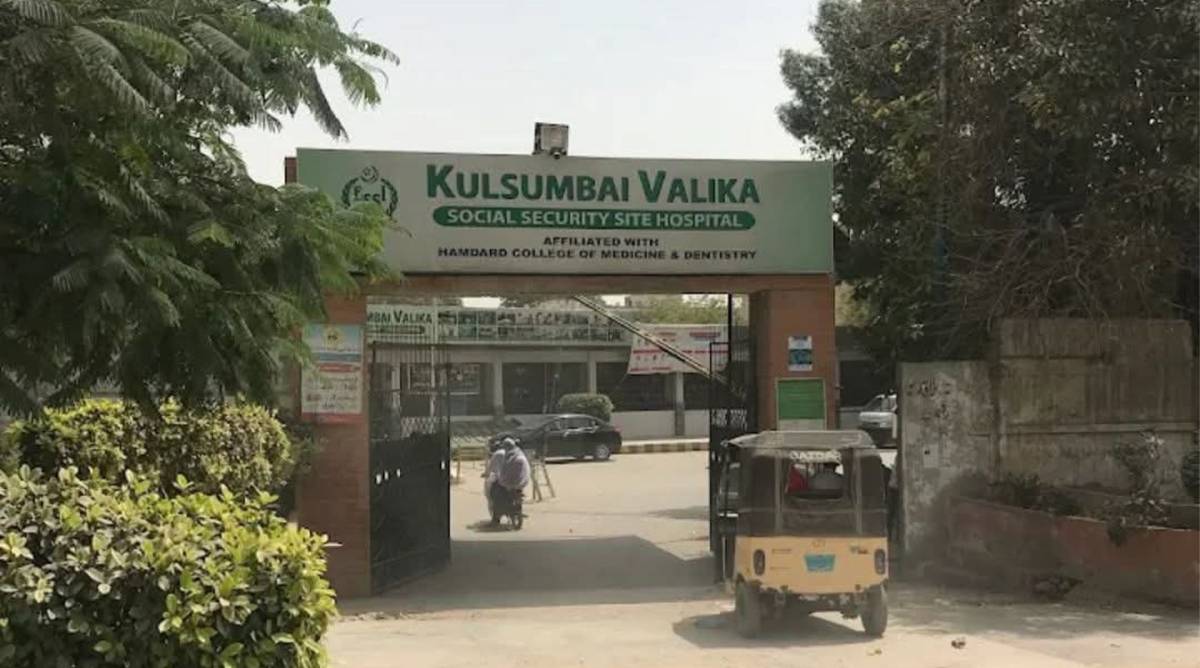
Sindh High Court’s constitutional bench on Thursday directed the Sindh government to submit a detailed report within two weeks on the alleged HIV outbreak among children who received treatment at the Sindh government–run Kulsum Bai Valika Social Security SITE Hospital in Karachi.
The order came during the hearing of a petition seeking action over the spread of HIV, which petitioners say was caused by the reuse of contaminated syringes at the hospital.
A large number of HIV-positive children and their parents were present in the courtroom, their attendance underscoring the gravity and human cost of the allegations.
Counsel for the petitioners argued that the Sindh government had demonstrated ‘gross negligence’ in handling the matter, alleging that the use of contaminated syringes at Valika Hospital had infected hundreds of children with HIV.
The lawyer informed the court that nine children had died and that hundreds more had contracted the virus, painting a grim picture of a community still reeling from the outbreak. Despite eight months having passed since those deaths, he said, no meaningful action had been taken to address the crisis.
He told the bench that an inquiry had been launched after a legal notice was filed, but its findings were neither presented to the court nor shared with the families who had been devastated by the losses. He added that international organisations, including UNICEF, had voiced serious concern over the handling of the situation.
The petition also stated that First Information Reports (FIRs) had not been registered in connection with the children’s deaths. The petitioners’ lawyer implored the court to step in, warning that without prompt, decisive action more children could lose their lives.
Responding to the submissions, Justice Adnan Karim acknowledged the gravity of the matter but emphasised that proceedings must follow the law. “Everyone has to die one day, but the court will proceed according to the prescribed legal procedure,” the judge remarked. When the petitioners’ counsel insisted the government had failed to act, Justice Adnan Iqbal urged him to allow the court to perform its role.
The bench said it would decide only after receiving replies from all parties and assured the petitioners the matter would be determined in accordance with the law. The hearing was adjourned until July 20, and notices were issued to the respondents to submit their replies.
The hearing came a day after a three-year-old girl from Orangi Town tested positive for HIV, bringing the total number of infected children linked to the outbreak to 107.
According to the child’s family, the HIV infection was confirmed by three separate laboratory tests: Rapid Detect, Uni-Gold and the HIV Combo (Ag/Ab) assay. The parents say their child was treated at Kulsum Bai Valika Social Security SITE Hospital and began experiencing health complications afterwards, which prompted the HIV testing.
This latest confirmed case has deepened alarm over an unfolding outbreak among children who received care at the government-run hospital in Karachi’s SITE Town. Health authorities report that 107 children from Orangi Town have so far tested positive for HIV, while the death toll among infected children in Zia Colony has risen to nine.
Several affected families allege that hospital staff reused syringes on multiple children, resulting in the spread of the virus. In February, Federal Minister for National Health Services Syed Mustafa Kamal publicly stated that the outbreak was caused by the reuse of contaminated syringes at Valika Hospital. Addressing the National Assembly on June 10, the minister announced that the government had banned five types of syringes following a rise in HIV/AIDS cases across the country, and he said reports of increasing HIV infections had also emerged from Islamabad and Taunsa in Punjab.