
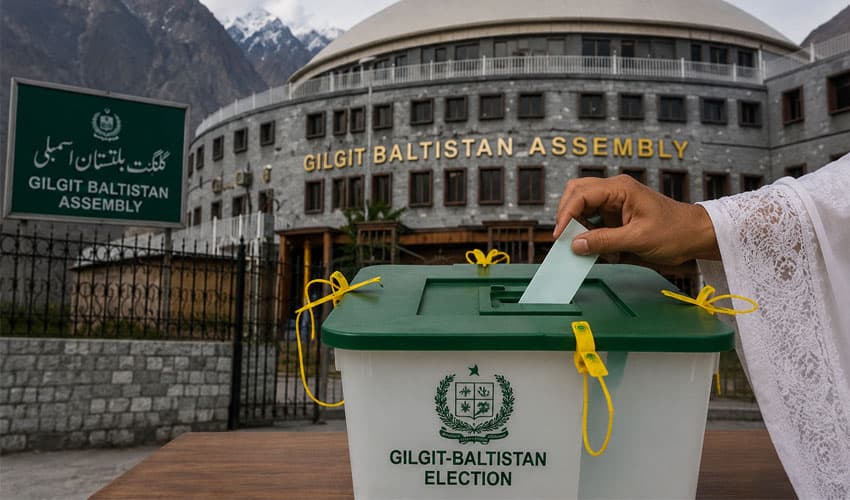
Unofficial results on Monday indicated that the Pakistan Peoples Party (PPP), a coalition partner, emerged as the single largest force in Gilgit-Baltistan’s elections but stopped short of a majority, leaving independents with potentially decisive leverage as coalition talks begin.
The ballot covered 24 directly elected seats in a strategically important, mountainous corridor bordering China, Afghanistan and Indian-administered Kashmir. With towering peaks and key transit routes linking Pakistan and China, Gilgit-Baltistan’s political balance carries outsized significance for regional projects and national politics.
According to preliminary data reported by the state news agency, the PPP won 10 seats, the Pakistan Muslim League-Nawaz (PML-N) secured six, PTI-backed candidates took two seats, and the Majlis Wahdat-e-Muslimeen (MWM) won one. Independent candidates won five seats and are expected to be pivotal in post-election bargaining over government formation.
Some 396 candidates, including 266 independents, contested for seats in the 33-member assembly, which also includes six reserved seats for women and three for technocrats and professionals. Among the prominent victors was former chief minister Hafiz Hafeez-ur-Rehman of the PML-N, who triumphed by a comfortable margin. Observers note that the result reflects a pattern in which control of Gilgit-Baltistan often echoes broader shifts at the federal level, with PPP, PML-N and PTI alternating control in recent elections.