
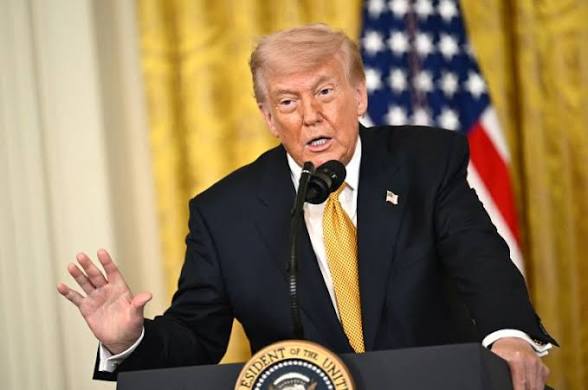
WASHINGTON (Reuters) – President Donald Trump on Sunday rejected Iran’s response to a US proposal for peace talks, dashing hopes for an imminent end to the 10-week-old conflict that has caused widespread damage in Iran and Lebanon, paralysed maritime traffic in the Strait of Hormuz and driven up global energy prices.
Days after the US floated an offer in the hopes of re-opening negotiations, Iran on Sunday released a response focused on ending the war on all fronts, especially Lebanon, and on the safety of shipping through the blockaded Strait of Hormuz, Iranian state TV said.
Within hours of the Iranian proposal’s release, Trump dismissed it with a post on social media.
“I have just read the response from Iran’s so-called ‘Representatives’. I don’t like it – totally unacceptable,” Trump posted on Truth Social, without giving further details.
Oil prices rose US$3 a barrel after the United States and Iran failed to reach an agreement.
Iran’s proposal includes a demand for compensation for war damages and an emphasis on Iranian sovereignty over the strait, state media said.
It also calls on the US to end its naval blockade, guarantee no further attacks, lift sanctions and end a US ban on Iranian oil sales, the semi-official Tasnim news agency said.
The US had proposed an end to fighting before starting talks on more contentious issues, including Iran’s nuclear program.
The Wall Street Journal quoted unnamed sources saying Iran proposed diluting some of its highly enriched uranium and transferring the remainder to a third country.
Pakistan, which has been mediating talks over the war, forwarded the Iranian response to the US, a Pakistani official said.
Despite a month-old ceasefire in the conflict and after some 48 hours of relative calm, hostile drones were detected over several Gulf countries on Sunday, underlining the threat still facing the region.
But the QatarEnergy-operated carrier Al Kharaitiyat passed safely through the strait and was heading for Pakistan’s Port Qasim, according to data from shipping analytics firm Kpler. It was the first Qatari vessel carrying liquefied natural gas to cross the strait since the US and Israel started the war on Feb 28.
Sources said earlier the transfer, which offered a modicum of relief to Pakistan after a wave of power blackouts caused by a halt to gas imports, had been approved by Iran to build confidence with Pakistan and with Qatar, another mediator.
In addition, a Panama-flagged bulk carrier bound for Brazil that had previously attempted to transit the strait on May 4 passed through, using a route designated by Iran’s armed forces, Tasnim reported on Sunday.