

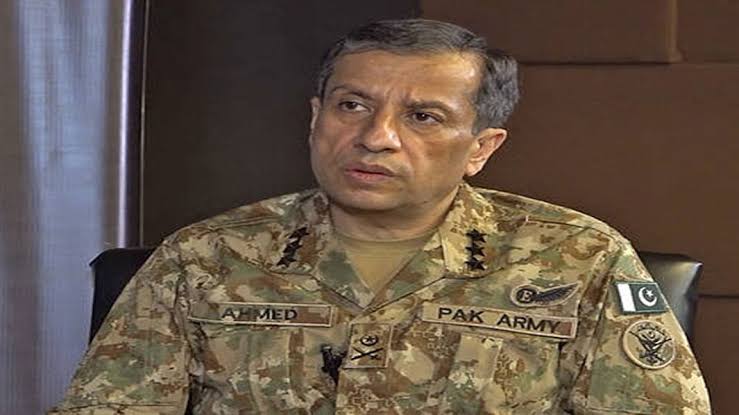
Director General Inter-Services Public Relations (DG ISPR), Lieutenant General Ahmed Sharif Chaudhry, has advocated for a negotiated resolution to the ongoing Middle East conflict, underscoring that diplomacy remains indispensable to averting further military escalation.
During an interview with an Arab television channel, the military spokesperson stated that should diplomatic avenues fail and military confrontation ensue, the collective deterrence mechanism of the Makkah Alliance would be activated.
Chaudhry hailed the Makkah joint defence agreement as a landmark achievement accomplished within a remarkably short span, emphasizing that it encapsulates the shared vision of the three participating nations.
He reiterated that safeguarding Saudi Arabia’s sovereignty, territorial integrity, and the sacred sites of Makkah and Madinah remains a paramount priority for Pakistan. He affirmed that Pakistan’s stance on protecting these holy places is unambiguous and unwavering, adding that the country’s political leadership and field marshal had already communicated this position clearly.
The DG ISPR noted that attacks on holy sites have provoked profound indignation among the public as well as political and military leadership. He cautioned that any further escalation of tensions, at any level, would yield no benefits for any nation.
Highlighting the perils of a broader conflict, Chaudhry stressed that expanding the military confrontation in the Middle East serves no one’s interests. He reiterated that achieving a negotiated settlement is essential to prevent the situation from sliding into further deterioration.
He further emphasized that the Makkah Alliance’s leadership and strategic direction are sharply delineated, affirming that the alliance harbors no aggressive intentions whatsoever.
Chaudhry underscored that Pakistan, Saudi Arabia, and Türkiye share a unified commitment to peace, stability, and prosperity in the region. He clarified that the alliance is not aimed at any specific country but is designed to foster regional peace, security, and enduring stability.