

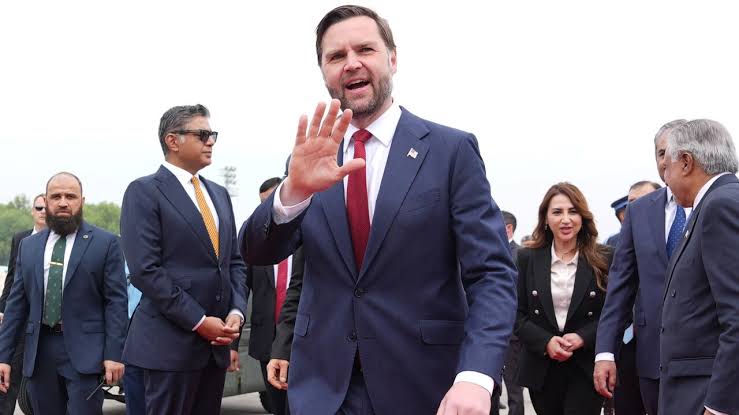
After marathon, high-stakes negotiations in Islamabad, Vice-President JD Vance announced that the United States and Iran failed to secure an agreement.
Vance said Iran had opted “not to accept our terms,” and emphasized that Washington must obtain a clear, “fundamental commitment” from Tehran to abandon any pursuit of nuclear weapons. He spoke as he prepared to depart Pakistan.
Vance said he spoke with US president Donald Trump at least half a dozen times during the talks, and one of the most significant points of difference between the two sides had been around the development of nuclear weapons.
“We need to see an affirmative commitment that [Iran] will not seek a nuclear weapon, and they will not seek the tools that would enable them to quickly achieve a nuclear weapon,” he said, “That is the core goal of the president of the United States, and that’s what we’ve tried to achieve through these negotiations.”
Iran’s foreign ministry called the meetings “intensive,” and criticized U.S. demands as “excessive” and “unlawful,” urging restraint from Washington.
Our Islamabad correspondent described the scene as heavy with disappointment, with diplomatic hopes dimmed after tense exchanges.
Earlier, President Donald Trump brushed off the outcome, saying it “makes no difference” to him whether a deal is struck and asserting, “regardless what happens, we win.”
Amid ongoing Israeli strikes on Hezbollah positions, Prime Minister Benjamin Netanyahu said he seeks a lasting peace with Lebanon and cautioned that Israel’s campaign against Iran remains “not yet finished.”
The talks in Islamabad were the first direct US-Iranian meeting in more than a decade and the highest-level discussions since the 1979 Islamic Revolution. The outcome could determine the fate of the fragile two-week ceasefire and the reopening of the strait of Hormuz, a choke point for about 20% of global energy supplies that Iran has blocked since the war began. The conflict has sent global oil prices soaring and killed thousands of people.