
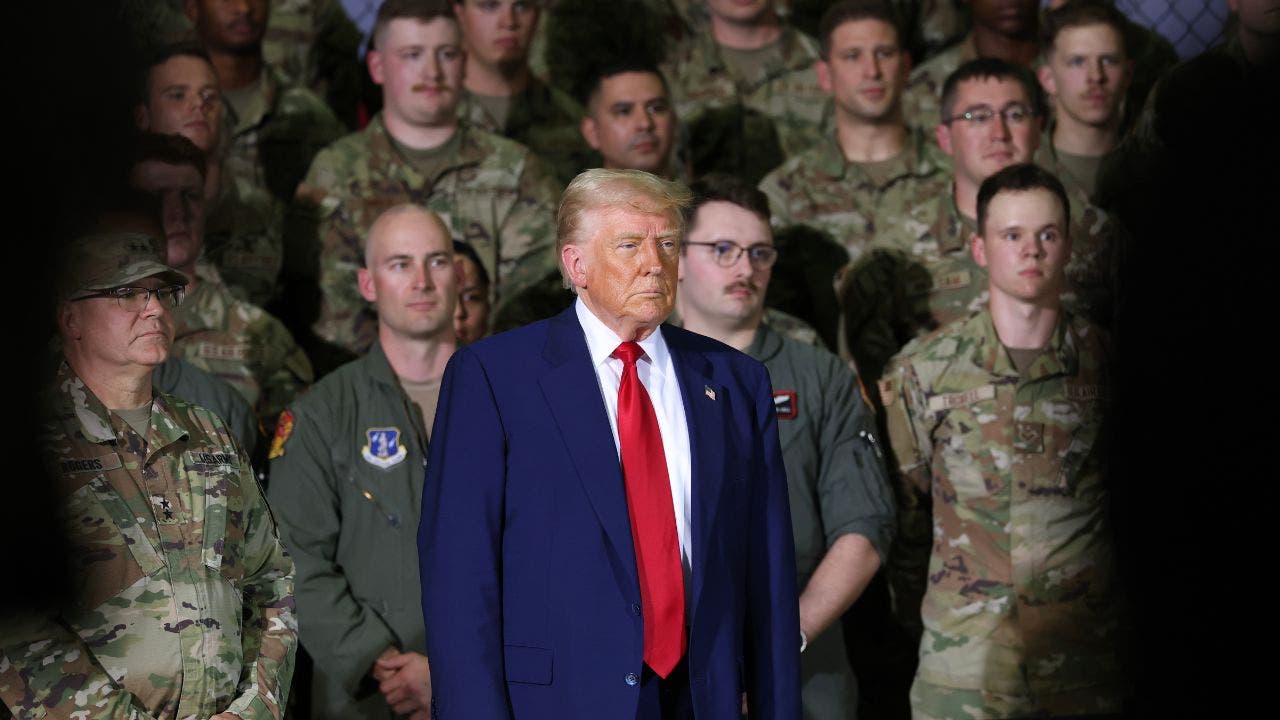
Almost a month after the Iran conflict began, the United States is preparing to deploy thousands of additional soldiers to the Middle East, widening a military presence that already counts tens of thousands of American personnel in the region.
Pakistan has proposed hosting peace talks to pursue a ‘comprehensive settlement’ to the fighting, though neither Washington nor Tehran has confirmed any talks.
On Tuesday, the U.S. ordered thousands more troops from the Army’s 82nd Airborne Division to the area; those forces could be rapidly used for further action—such as seizing the Kharg Island oil port or reopening the strait—if talks break down.
Analysts warn the deployment may strengthen the president’s hand in negotiations but could also deepen Tehran’s resentment and trigger a tougher response.
‘Diplomacy is almost always backed up by force,’ Iranian-American historian Arash Azizi told CNBC by email, and he said that under Trump this backing is done ‘more openly and more crudely.’
The administration has sent mixed messages: Trump is reported to want a quick end to the war, while Defense Secretary Pete Hegseth has maintained a bellicose tone, stating ‘we see ourselves as part of this negotiation as well. We negotiate with bombs.’
According to Daniel Davis, a senior fellow and military expert at Defense Priorities, the U.S. ground combat force available may be sufficient to capture a small, lightly defended objective for a short period. But he warned it would not be enough to maintain an operation against a country that has spent years building underground missile cities, dispersing its forces and preparing specifically for this kind of conflict.
“I think the reinforcement has a very low probability of success and a very high probability of casualties,” Davis told CNBC’s “Squawk Box Asia” on Thursday. He retired from the U.S. Army after 21 years of active service.
Davis said sending elite units such as the 82nd Airborne Division could deliver a rapid response on the ground, yet such gains would be unsustainable without a massive follow-on military commitment.
He added that U.S. military planning for Iran has so far shown some miscalculations by the Trump administration.
The administration may have been encouraged by the successful January operation to capture former Venezuelan President Nicolas Maduro, Davis said, but Iran’s terrain, military strength and strategic depth bear little resemblance to the Caracas raid.
Unlike Venezuela, Iran is “very much capable of striking back,” Davis said — it has well-trained proxies across the region and controls the chokepoint through which about one-fifth of the world’s oil passes. “This is a far more difficult task than that in Venezuela,” he said.